
Putting food waste back to work.
EvE Waste is building a modular bio-reactor that turns food waste into clean energy and nutrient-rich fertilizer.
What is built, and what is being built
EvE Waste is a development-stage company in Columbus, Ohio. We would rather tell you exactly where we are than imply we are further along.
-
Built
AD system prototype
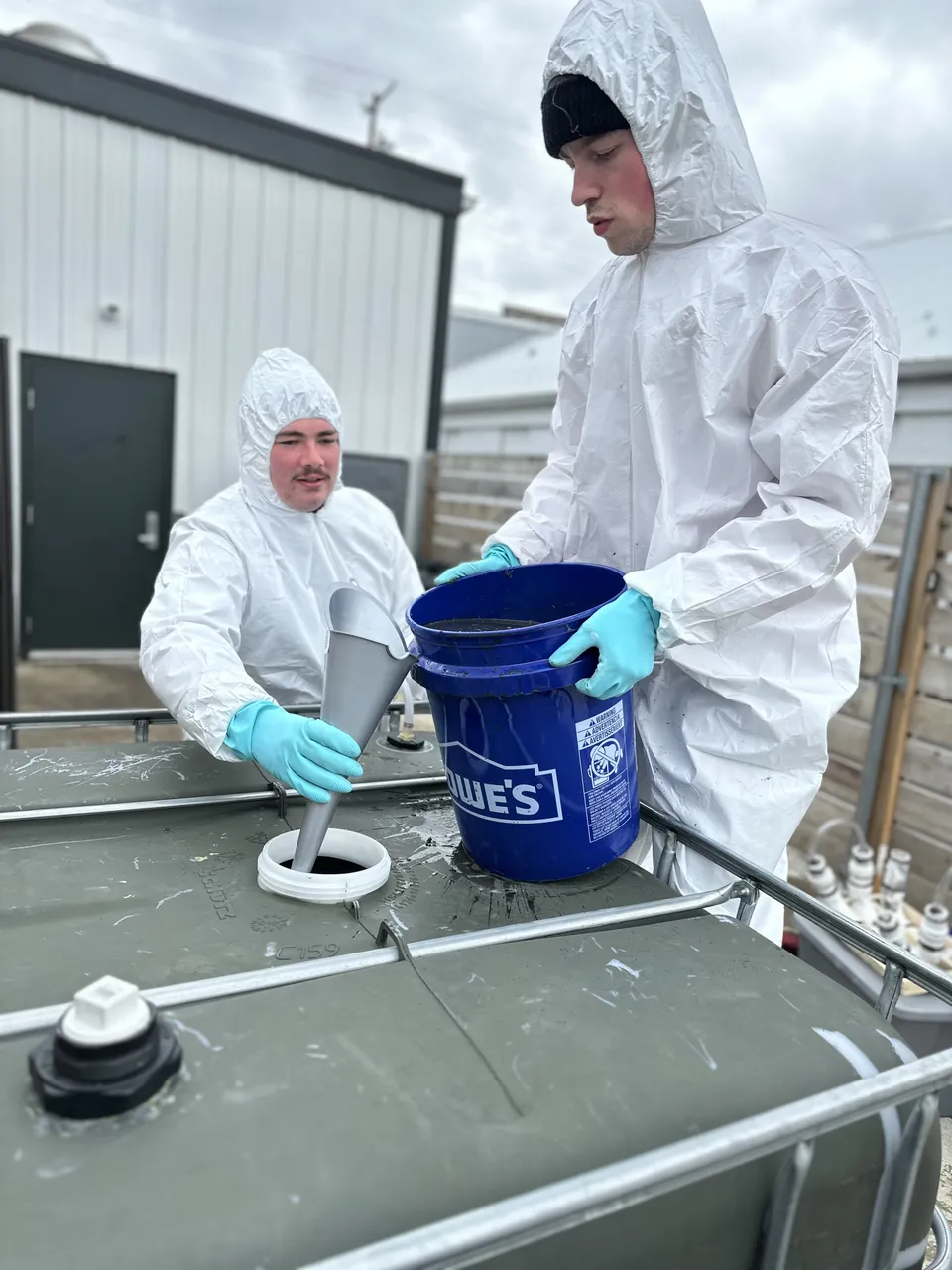
The prototype is built and has been through test runs.
-
In progress
Bio-reactor, second stage
The second stage of the build is the work in front of us now.
-
In development
Waste-tracking model
We are developing the waste-tracking model now. It reads what a site throws out and turns it into a report a site can act on.
-
Raising
Pre-seed round
We are raising pre-seed funding and applying for grants to build stage two. No clients yet, and no revenue claimed until there is.
What the round funds →
Unwinding single-stream waste to unlock the value in every ton
A statement about the span of human waste disposal, not a measurement of anything EvE Waste has done. It is the baseline our economics have to beat.
A projection of the value our process generates compared with landfilling the same material. It is not a client result. EvE Waste has no clients yet, and nothing on this site is published as measured until it is.
The rate at which landfill tipping and hauling charges rise each year, taken from published industry figures rather than our own measurements. It is why the cost case moves against landfilling every year you wait.
Four ways we put waste to work
-
Transforming food waste for cost, value, and impact
We are building a bio-reactor that processes food waste for less than a landfill charges and gets more value out of it. Through the process of anaerobic digestion, food waste becomes clean energy and fertilizer.
-
Managing waste for less than a landfill charges
Our modelling puts the new economic value at up to 19% against landfilling. The savings a host site sees come out of that margin, and the figure stays labelled as modelled until a running unit can measure it.
-
Waste data that comes with the unit
We are developing the waste-tracking model now. It reads what a site throws out and turns it into a report: where the waste comes from, what it costs, and what an organic waste mandate needs to see.
-
Doing it all while protecting the Earth
The system puts economics first and the Earth second. Nutrients stay in the loop for the next crop of food, and clean energy comes out of the same process.
Same waste. Two outcomes.
The landfill column is sourced and current. The EvE Waste column is what the system is built to do, and it stays a design target on this site until a unit runs on a real site.
| Landfill | EvE Waste |
|---|---|
| Buried. 62.5 million tons of US food waste in 2020. | Digested on the site that produced it. |
| Tipping fees rose 10% in a single year. | Priced against volume we measured first. |
| You get a receipt. | You get fertilizer and clean energy. |
| Third-largest source of US methane emissions. | Gas captured by design, in a sealed vessel. |
| Ranked 10th of 12 by the EPA, above only incineration and the drain. | Ranked 6th of 12 by the EPA, above composting. |
| Diversion figures you cannot independently check. | Diversion you can measure, once instrumented. |
Figures: EPA, 2020–2023 (landfill methane, Wasted Food Scale) and EREF, 2024 data.
Do you believe in a cleaner future?
Join us on the journey.